

When someone asks, "How are you feeling?" most people reach into an internal library of emotional vocabulary—anxious, relieved, frustrated, hopeful.
For clients experiencing alexithymia, that library often feels locked, dimly lit, or written in a language they were never taught to read. Rather than feeling nothing, people with alexithymia experience difficulty identifying, differentiating, and describing their emotional states. They might notice a tight jaw, a heavy stomach, or sudden exhaustion, without any clear bridge connecting those physical sensations to an underlying emotion.
When you add the pressure of real-time verbal speech to the mix—especially for neurodivergent clients, nonspeaking or minimally speaking individuals, or those who experience situational mutism under stress—traditional talk therapy can feel like a pop quiz they are bound to fail.
In my practice, combining Augmentative and Alternative Communication (AAC) with Expressive Arts removes the bottleneck of spoken language, creating accessible, pressure-free pathways for clients to recognize and communicate their inner worlds.
Why Spoken Language Isn’t Always the Best Starting Point
Alexithymia and communication barriers frequently overlap. Whether shaped by autism, ADHD, trauma, or nervous system overwhelm, trying to simultaneously decode an internal sensation, translate it into an emotion word, and speak it aloud requires massive cognitive load.
When therapy relies strictly on verbal processing, clients often default to masking, shutting down, or repeating "I don't know" simply because the medium doesn't match how their brain processes information. By bringing AAC and expressive arts into the room, we shift from demanding spoken answers to offering tangible tools.
Step 1: Reducing Cognitive Load with AAC
AAC isn't just for basic needs—it is a powerful tool for emotional accessibility and self-advocacy in therapy. Having visual, structured, or text-based communication options available takes the pressure off real-time speech and supports emotional identification in several ways:
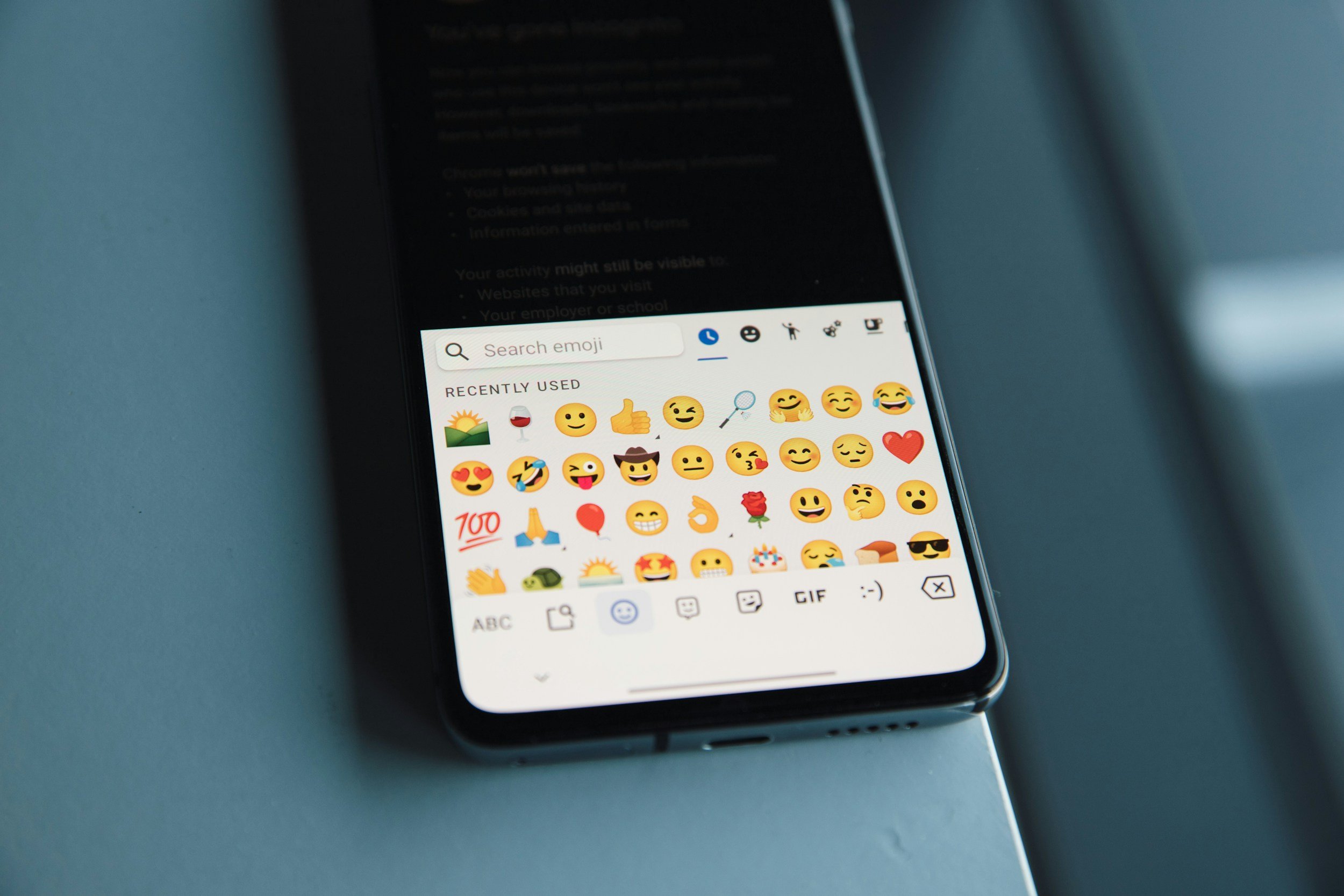
Visual Emotion & Sensation Menus: Instead of pulling a word out of thin air, clients can scan curated icons, colour zones, or body-sensation boards on a tablet or printed sheet. Recognizing a symbol or phrase is often far easier than generating a word from scratch.
Customizing Personal Vocabulary: Many standard emotion charts feel overly clinical or inaccurate. Together, we can build custom AAC buttons or phrases that match how a client actually experiences their internal state—such as "brain static," "battery at 5%," "too loud inside," or "need space, not mad."
Honouring Processing Time: Typing on a device, pointing to a symbol, or toggling between communication modes slows the pace of the session down, giving the nervous system room to check in without the pressure of immediate eye contact or vocal response.
Step 2: Giving Form to the Unnamed with Expressive Arts
While AAC provides structure and vocabulary, Expressive Arts captures everything that doesn't fit neatly onto a button or icon. When an internal state is too complex, fuzzy, or unfamiliar for words—spoken or typed—creative materials let clients externalize what is happening inside their body.
In session, this often looks like:
Colour and Texture Mapping: Using pastels, paint, collage, or sensory materials to show the "weather" inside their chest or stomach—no emotion label required.
Abstract Mark-Making: Letting line weight, speed, and rhythm reflect the pace of their nervous system (sharp, jagged strokes vs. slow, heavy shading).
Bridging Art and AAC: Once a client creates an image, sculpture, or colour swatch, we can use their AAC device alongside it—selecting descriptors, metaphors, or sensation words that pair with what they made.
Over time, the artwork itself becomes part of the client's personal communication system. A specific colour, shape, or texture they created in session can become shorthand for a feeling they previously had no way to share.
Step 3: Building a Personalized Language Over Time
When AAC and expressive arts work together, therapy stops being about forcing clients into neurotypical or verbal communication molds. Instead, we focus on co-creating a language that actually fits their brain and body.
As safety and curiosity replace the frustration of not having the "right" words, clients begin building bridges between physical sensations, visual cues, and meaningful communication—both inside the therapy room and in their daily relationships.
Curious About Working Together?
If traditional talk therapy has ever felt overwhelming, overly verbal, or disconnected from how you actually process and communicate, you don't have to force yourself into a format that doesn't fit. Whether you use an AAC device full-time, part-time, or simply find it easier to express yourself visually and creatively, therapy can adapt to you.
If you'd like to explore whether this approach feels like a good fit, feel free to reach out to book a consultation.
